
Why Bend Radius Matters in Sheet Metal Design
Learn why bend radius is critical in sheet metal fabrication. Discover how proper bend radius selection prevents cracking, enhances part strength, and reduces manufacturing costs.
Why Bend Radius Matters in Sheet Metal Design
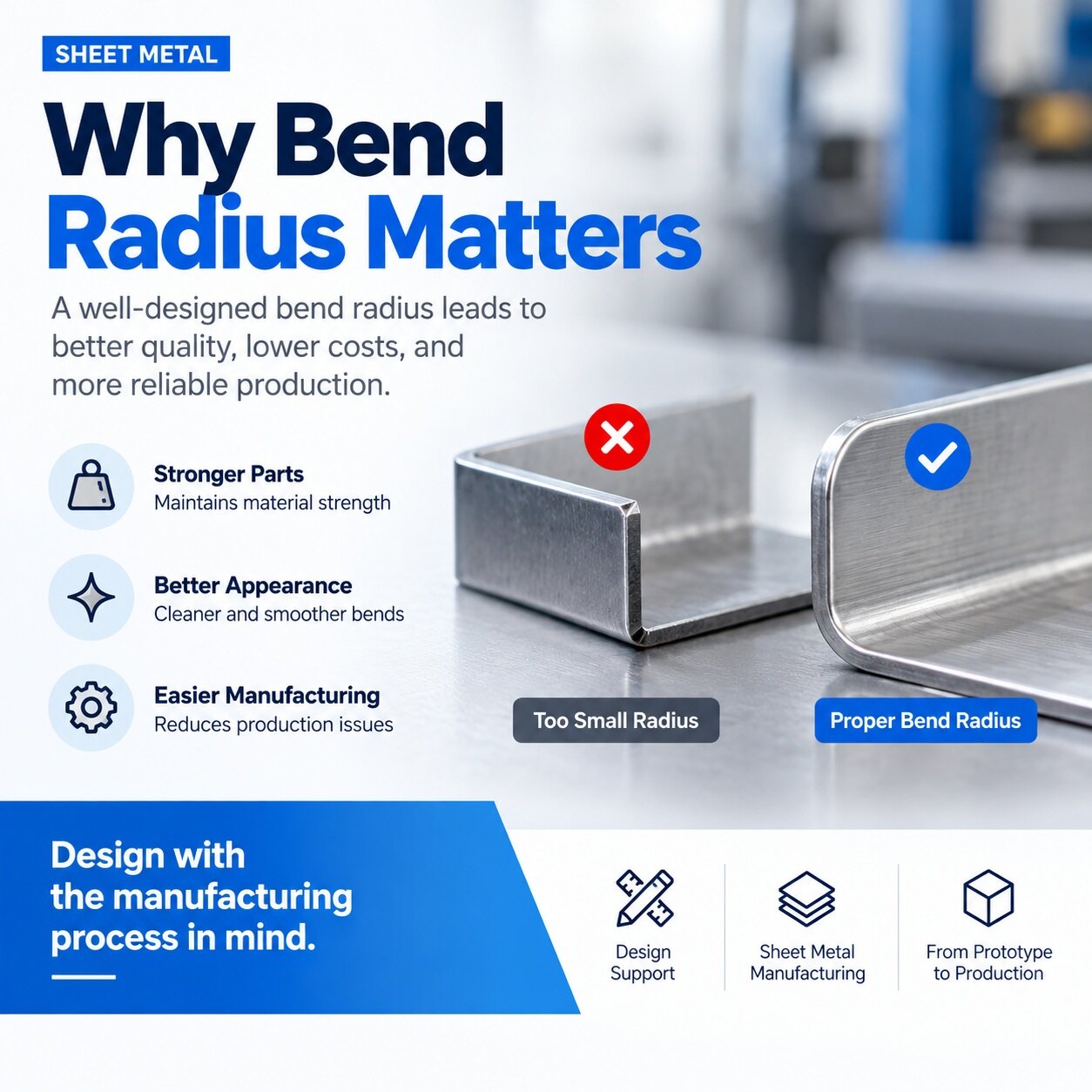
A bend may look like a simple feature in a CAD model, but in sheet metal fabrication, the bend radius plays a critical role. It directly affects structural part strength, surface appearance, overall manufacturability, and production cost.
The Risks of a Too-Small Bend Radius
If the radius is too small relative to the material type and thickness, the bending process can create excessive internal stress. This often results in material cracking, deformation, surface tearing, or inconsistent manufacturing results that fail quality inspections.
Benefits of a Manufacturing-Friendly Bend Radius
Designing with an optimal bend radius helps achieve:
Stronger Parts: Maintains material structural integrity without over-straining the outer fibers.
Better Appearance: Results in cleaner, smoother bends free of surface distortion or cracking.
Easier Manufacturing: Reduces production bottlenecks, tool wear, and shop-floor issues.
Predictable Costs: Minimizes trial-and-error adjustments, ensuring more predictable and lower manufacturing costs.
Design with the Manufacturing Process in Mind
Good sheet metal design starts long before the first bend — by designing with the manufacturing process in mind. Considering press brake limits, grain direction, and material springback during the design phase saves time and prevents costly tooling modifications later.
Partner with Bafang Hardware
At Bafang Hardware, we support projects from DFM (Design for Manufacturability) and rapid prototyping to full-scale sheet metal fabrication, precision finishing, and mass production.
Have a sheet metal project ready?