
Wall Thickness Matters in Injection Molding: How to Optimize Part Design
Learn how wall thickness impacts injection molding quality, cooling time, and production costs. Discover essential DFM best practices to optimize part design, prevent defects, and ensure manufacturing success
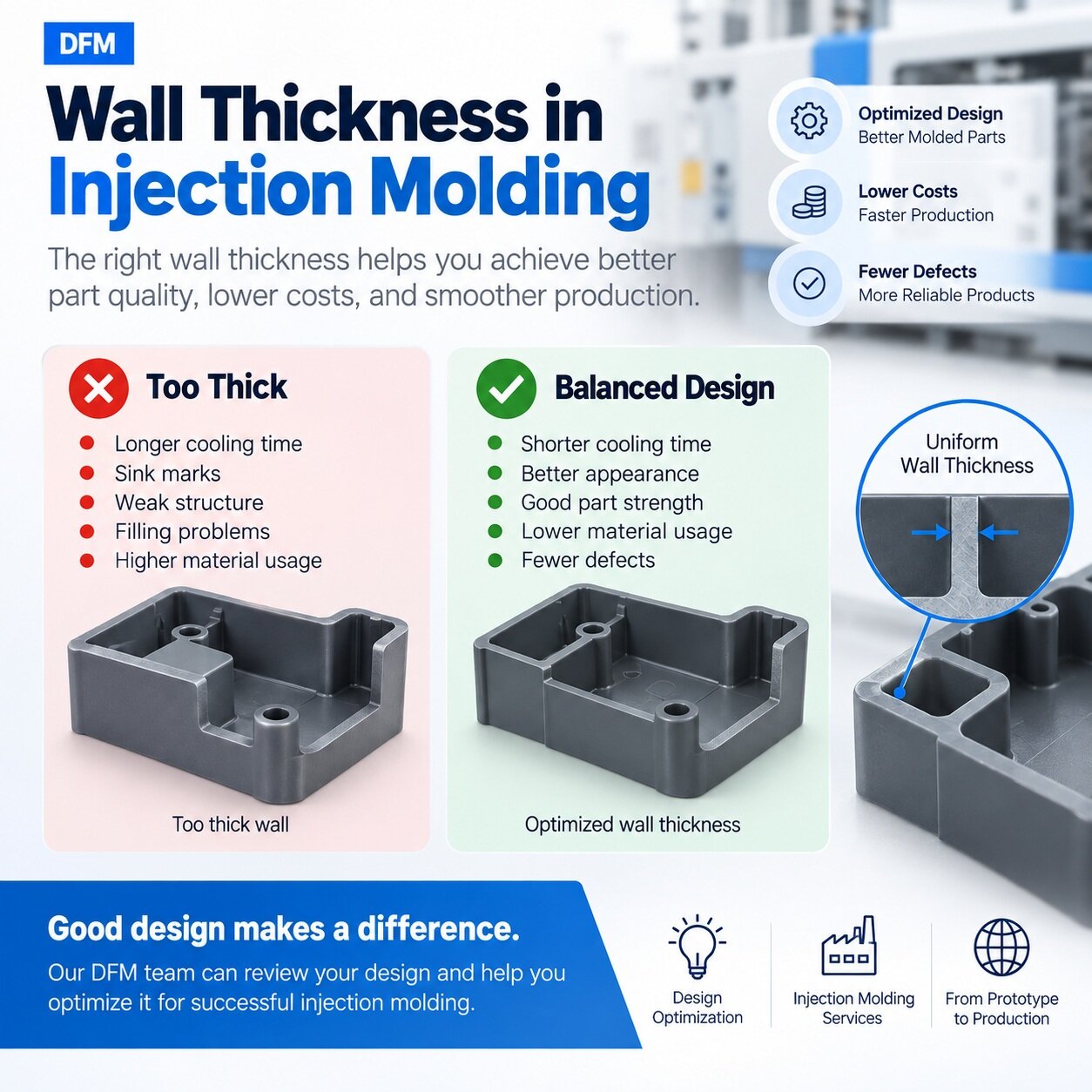
Wall thickness may look like a small design detail, but it can directly affect cooling time, material usage, part strength, appearance, and molding defects.
Walls that are too thick can increase cooling time and create sink marks, while walls that are too thin may lead to filling problems and weak areas. The goal is not simply to make walls thinner — it's to create a balanced and consistent wall thickness that works with the molding process.
Why DFM Review is Essential A good DFM (Design for Manufacturing) review before tooling can help identify these issues early, reduce unnecessary costs, and improve production reliability. By analyzing wall transitions and ensuring uniform thickness, engineers can prevent common defects like warping and sink marks before production begins.
Partner with Bafang Hardware At Bafang Hardware, we support projects from design review and prototyping to injection molding and production. Have a part you're preparing for manufacturing? Send us your CAD files for an engineering review and ensure your design is optimized for success.