
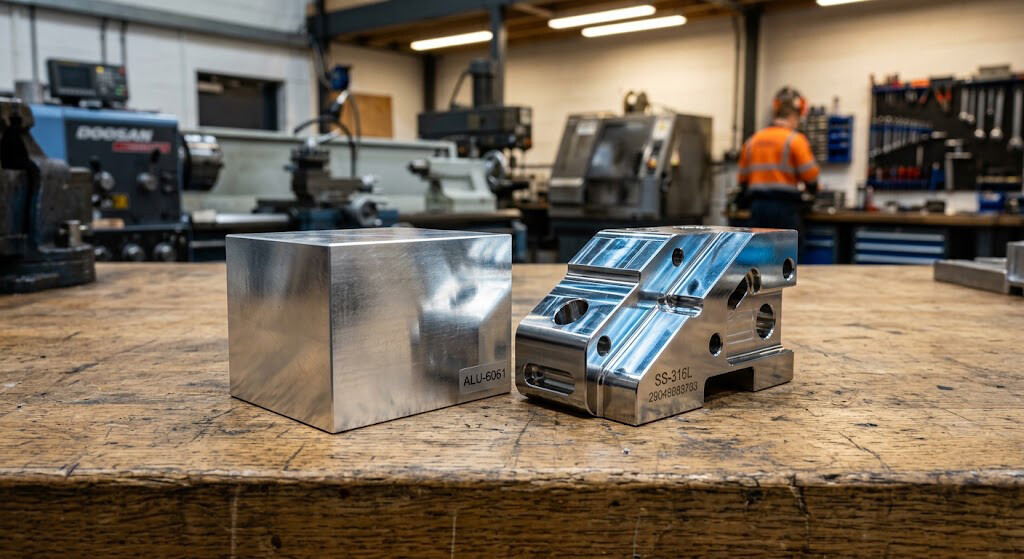
Aluminum vs. Stainless Steel: Choosing the Right Metal for Your Engineering Project
A comprehensive guide comparing aluminum and stainless steel across weight, cost, corrosion resistance, and common applications in robotics, medical, and industrial fields.
Aluminum vs. Stainless Steel: Choosing the Right Metal for Your Engineering Project
When designing custom mechanical parts for CNC machining or rapid prototyping, selecting the appropriate metal alloy is vital to the success of your product. Among the most popular choices in modern manufacturing are Aluminum and Stainless Steel. While both metals offer exceptional structural integrity, they possess distinct mechanical properties tailored to different environments and use cases.
Aluminum: Lightweight and Cost-Effective
Aluminum is widely celebrated as the go-to material for high-speed machining and lightweight structures.
Key Advantages:
Lightweight: Significantly lower density than steel, making it ideal for weight-sensitive applications.
Easy Machining: High machinability allows for faster cutting speeds, reduced cycle times, and lower production costs.
Thermal Conductivity: Excellent heat dissipation properties.
Common Applications: Robotics frames, consumer electronics housings, automation components, and aerospace brackets.
Stainless Steel: Strength and Corrosion Resistance
When structural durability and resistance to harsh, corrosive environments are non-negotiable, Stainless Steel takes center stage.
Key Advantages:
Corrosion Resistance: Contains chromium, which forms a passive layer protecting against rust and chemical degradation.
Higher Strength: Offers superior tensile strength and wear resistance under heavy mechanical loads.
Longevity: Exceptional durability in extreme temperatures and sanitary environments.
Common Applications: Medical surgical instruments, food and beverage processing equipment, marine hardware, and heavy industrial machinery.
Conclusion: Which Should You Choose?
The right material ultimately depends on your project’s operational environment and performance requirements. If your design requires a lightweight structure with high cost-efficiency, Aluminum is the ideal choice. If your component demands rugged durability against corrosion and mechanical stress, Stainless Steel is unmatched.
Need expert advice on material selection for your next CNC machining project?
Contact our engineering team today to optimize your design for performance and manufacturability.